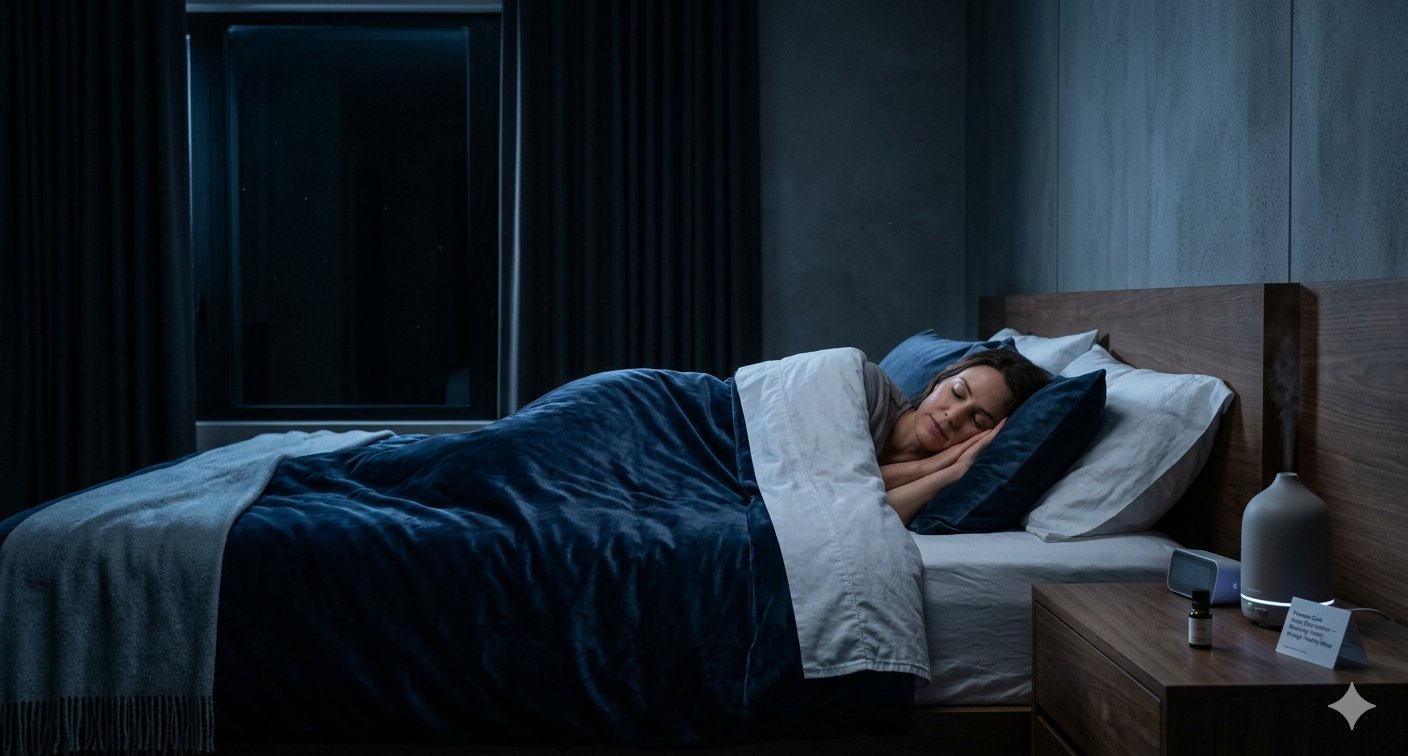
Sleep Is Not Optional: Why Andrew Huberman Calls It Your #1 Health Tool
In a culture that celebrates busyness and treats sleep as the first thing to sacrifice, Andrew Huberman, PhD — professor of neurobiology at Stanford and host of Huberman Lab — delivers a message that cuts against the grain: Sleep is not recovery. Sleep is performance. It is the biological foundation on which everything else is built.
This article draws on research and podcast content from Andrew Huberman, PhD. It is for educational purposes and does not constitute medical advice.
Why Sleep Is Different From Rest
During sleep — particularly during slow-wave (deep) sleep and REM sleep — your body is doing things it literally cannot do while you’re awake: glymphatic clearance (flushing amyloid-beta and tau proteins from the brain), memory consolidation, hormonal restoration (the majority of testosterone and HGH is secreted during deep sleep), cellular repair, immune function, and metabolic regulation.
Huberman’s Core Sleep Protocols
- Morning light within 30–60 minutes of waking — sets your circadian clock and triggers a healthy cortisol pulse
- Consistent sleep/wake schedule — including weekends; “catching up” on sleep is not biologically real
- Cool bedroom (65–68°F) — core body temperature must drop for deep sleep onset
- No caffeine after 1–2 PM — caffeine suppresses deep sleep architecture even if you fall asleep fine
- Wind-down protocol — dim lights 1–2 hours before bed, avoid screens, use NSDR/yoga nidra
Supplements Huberman Discusses for Sleep
- Magnesium Threonate or Bisglycinate — supports sleep quality and depth via GABA receptor signaling
- Apigenin (chamomile extract) — mild anxiolytic, supports sleep onset
- L-Theanine — promotes relaxation without sedation
- Low-dose melatonin (0.1–0.5 mg) — much lower than typical commercial doses; high-dose melatonin may disrupt hormonal signaling
Sleep, Hormones, and Longevity: The Clinical Picture
At Provena Care, we see the downstream consequences of chronic sleep deprivation every week. The majority of testosterone secretion in men occurs during deep sleep — men with low testosterone frequently have unaddressed sleep dysfunction. Chronic poor sleep also drives an elevated and flattened cortisol curve, which blunts testosterone, increases visceral fat deposition, and drives insulin resistance.
What We Assess at Provena Care
Our sleep assessment covers chronotype, screening for obstructive sleep apnea (profoundly underdiagnosed and directly associated with testosterone suppression), 4-point salivary cortisol testing, hormone status, and full lifestyle audit. Where appropriate, we recommend magnesium and adaptogenic protocols, referral for sleep study, hormone optimization, and select peptide therapy protocols that increase slow-wave sleep and growth hormone secretion.
Q: How much sleep do I actually need? 7–9 hours for most adults. The “6-hours-is-enough” narrative is largely driven by people who have lost the ability to accurately self-assess impairment.
Q: Does alcohol help or hurt sleep? Alcohol reduces sleep onset latency but substantially suppresses REM sleep and increases nighttime waking. The net effect on sleep quality is consistently negative.